Why Independent Chemical Program Evaluations Improve Efficiency and Reduce Costs
Chemical treatment programs are a major line item for any refinery, yet many facilities lack clear insight into whether or not those programs are actually delivering value.
As a result, many chemical treatment programs operate reactively, only drawing attention when corrosion damage, reduced heat transfer through scaling or fouling, or equipment failure occurs. Optimizing chemical application and treatment through an independent chemical program evaluation can improve uptime, reduce costs and extend asset life.
Common Chemical Treatment Program Challenges

Refineries commonly face three recurring challenges within their chemical treatment programs: system corrosion, poor performance visibility and salt contamination. Each of these issues can quietly erode reliability, increase operating costs and reduce overall program effectiveness if not properly addressed. Are you normalizing this deviation?
System Corrosion
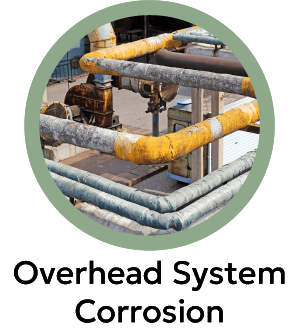
System corrosion remains one of the most persistent risks in refinery operations. Inconsistent dosing of neutralizing or filming amines can lead to localized corrosion, salt deposition and under-deposit attack in overhead systems. Without precise control and monitoring, even well-intended chemical programs can fall short. The result is accelerated equipment degradation, unplanned maintenance and increased risk to reliability.
Poor Performance Optics
Limited visibility into corrosion performance makes it difficult to determine whether a treatment program is truly working. Without meaningful monitoring data, trend analysis and independent verification, facilities often fall short of their objectives. This lack of insight can lead to unnecessary chemical spend, reactive decision-making and missed opportunities for optimization.
Salts & Contaminants
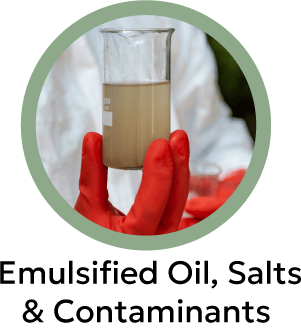
Salts and other contaminants in process and water systems can significantly undermine chemical treatment effectiveness. These contaminants reduce inhibitor performance, increase fouling risk and contribute to corrosion in critical systems. When not properly managed, they directly impact operational reliability, heat transfer efficiency and long-term asset integrity.
The Value of Independent Chemical Program Evaluation
A chemical program evaluation provides an objective, data-driven way to assess treatment performance. Our evaluations are independent assessments by experienced engineers who utilize a supplier-agnostic approach.
During an evaluation, several critical factors are reviewed, including:
- Mass balance versus test results
- Data from corrosion monitoring
- Data from corrosion coupons
The outcome is a clear set of recommendations to improve refinery reliability from a chemical treatment approach. A thorough assessment of the various chemical applications will result in improved uptime, optimized chemical costs and more consistent system performance without increasing operational complexity.
When Should Refineries Assess Their Chemical Treatment Programs?
Certain trigger events signal that it’s time to reassess chemical treatment programs, including:
- Persistent overhead system corrosion
- Unexplained fouling or scaling
- Upsets tied to chemical treatment
- Rising chemical costs without measurable improvements
- Market check
Operational changes also matter. Crude slate shifts, new processing units or capacity expansions can significantly alter corrosion and fouling risks.
Strategic moments, such as chemical vendor contract renewals or sustainability initiatives focused on water reduction, are ideal opportunities to engage specialty chemical services for refining.
Proactive evaluation helps identify issues early, minimizing costly failures or downtime in refinery processes and water treatment systems.
JEPCO’s Approach to Refinery Chemical Treatment Optimization
JEPCO provides Independent Chemical Treatment Evaluations backed by deep refining and petrochemical experience.
Additionally, our team of subject matter experts:
- Are supplier-agnostic, assuring unbiased, performance-based recommendations
- Use a data-driven methodology to evaluate corrosion control strategies, water treatment programs and specialty chemical applications
- Work beside your team to implement practical solutions
This approach is rooted in JEPCO’s broader engineering and EPC expertise. We deliver practical solutions that align with real-world refinery operations.
Optimize Your Chemical Treatment Programs with JEPCO
JEPCO optimizes your chemical treatment programs to deliver measurable results. If your refinery lacks clear insight into program performance, it may be time for an independent review.
Reach out to our team to discuss an Independent Chemical Program Evaluation and take the first step toward eliminating normalized deviations.